Carmen by Prosper Mérimée — Complete Audiobook
Narrated by Prosper Mérimée
·
Aug 14, 2026
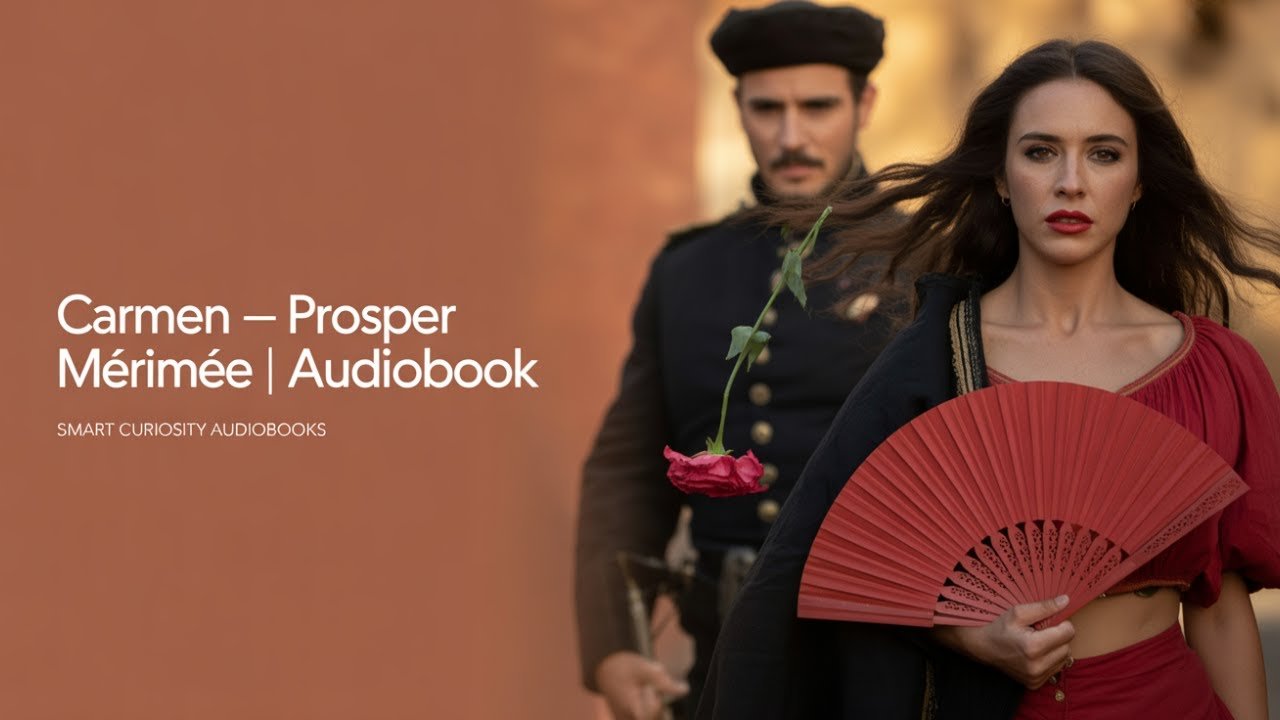
Listen to Carmen by Prosper Mérimée in seven ordered chapters, with context on freedom, narration, adaptation, and the historical text.
Carmen is a four-chapter novella about a man who mistakes possession for love and a woman who refuses to surrender her freedom. This Smart Curiosity edition presents Lady Mary Loyd's English translation as a chapter-by-chapter audiobook.
The story reaches Don José indirectly. A travelling scholar meets him in Andalusia, then hears the confession that explains how a soldier became an outlaw. That frame matters: José controls much of the narrative, but he cannot make Carmen behave like the woman he wants her to be.
Carmen chooses movement, risk, and independence even when the cost becomes clear. José answers uncertainty with jealousy and force. Their conflict is not a balanced romance that simply turns unlucky; it is a tightening struggle between one person's demand for control and another's refusal to be controlled.
Mérimée's nineteenth-century portrayal of Romani life also reflects the assumptions and stereotypes of its period. The audiobook preserves the historical text, while this companion distinguishes the novella from later adaptations and does not treat its cultural framing as neutral fact.
The unnamed traveller who opens the novella is not merely a neutral guide. His interest in geography, antiquity, and local custom gives the story the surface of a travel account, yet his judgments are also those of an outsider. Don José's confession then replaces that observing voice with the voice of a participant trying to explain his own collapse. Carmen herself is never granted the same sustained control of the narrative.
That imbalance is worth remembering while listening. José repeatedly describes fate as though it were an external power acting upon him, but the plot keeps returning to decisions he makes: desertion, violence, pursuit, and finally the belief that Carmen's refusal can be answered by force. Her language of fate works differently. She recognizes danger and refuses to purchase safety by promising obedience.
Many listeners know the title through Georges Bizet's opera. The novella and opera share central names and the fatal conflict, but they are not interchangeable. Mérimée's framing traveller, the archaeological interests of the opening chapter, and the long account of José's descent give the prose story a different shape. Hearing the novella makes it easier to see which parts belong to Mérimée and which entered popular memory through later stage traditions.
The channel edition follows the novella across four source chapters, with Chapter III divided into three audio parts. Start with Chapter I through Watch, or open the YouTube Music playlist to continue through all seven videos in order.
The source is Project Gutenberg eBook 2465, translated by Lady Mary Loyd. The Romania/EU review applies Directive 2006/116/EC's general life-plus-70 term to authority dates for Mérimée (died 1870) and Loyd (died 1936). The term-expiry conclusion is recorded in the package manifest.